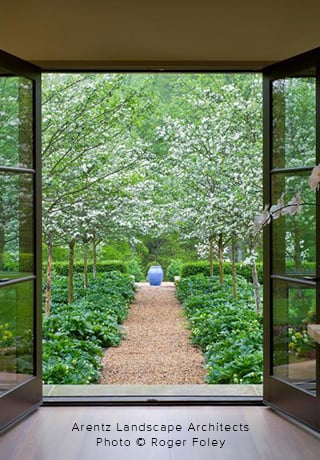
Focal Point Landscaping Ideas to Define Your Garden
Create compelling visual interest in the landscape with captivating focal points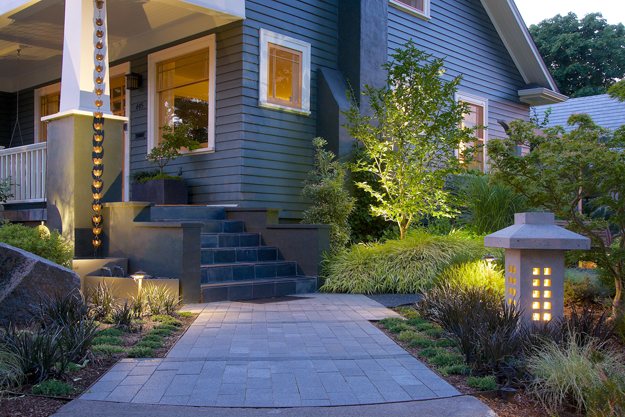
Spotlights and uplighting highlight multiple focal points in this front yard entry garden. Design: David P. Best and Barbara Hilty. Photo by: Janet Loughrey.
One of the key components of garden design is creating visual interest to draw the eye through the landscape. This is achieved by using linear elements such as pathways, stairways, fencing and hedging to direct the eye, with strategically placed focal points where the eye can land.
A focal point immediately commands attention and stands out from its surroundings, becoming the prominent feature in the landscape. It can be placed at the end of a pathway, as a central feature in a garden room, or anywhere in the landscape where focus is needed. Without focal points, a garden design can be visually chaotic and confusing.
Well designed focal points make an outdoor space feel more intentional and orderly, giving structure and purpose to the landscape. Many different garden elements can be used as attractive focal points, including a garden shed, gazebo, pergola, arbor, seating, container, water feature, statuary, or plants. A focal point can be used to draw attention, or distract from something unsightly.
On this page:FOCAL POINT LANDSCAPE DESIGN CONSIDERATIONS
Consider these landscape design principles when choosing and using focal points:
Placement:
When placing a focal point, consider how it looks from different angles in the yard. Placing a focal point at eye level makes it appear more prominent. Consider views from inside the home where a featured focal point can be enjoyed year-round.
Lines:
Straight and curved lines for pathways, stairs and other linear elements can be used to visually guide the viewer to the featured focal point.
Repetition:
Use shapes, textures and colors in surrounding elements to draw attention to a focal point. Rounded shrubs, square stepping stones or the same color foliage can be repeated along a pathway to lead the eye to a distant focal point. Place focal points at different distances to reinforce depth and lead the eye through the landscape.
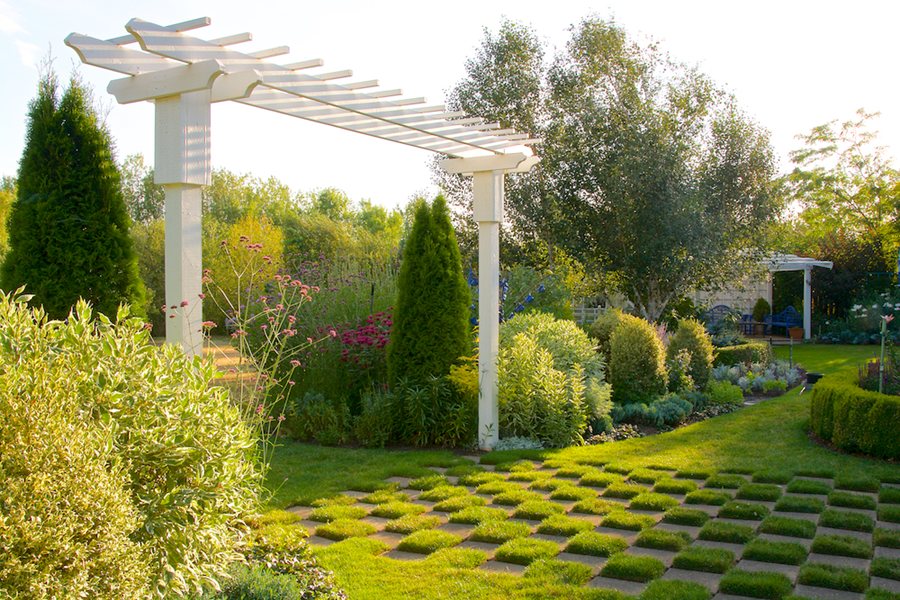
This grand arbor provides scale and serves as a focal point between two garden areas on this spacious suburban property. Nancy Cutler garden. Photo by: Janet Loughrey.
Scale:
Choose a focal point that’s in scale with your yard. A petite statuette can be used in a small garden space, while a larger sculpture is more suited a spacious suburban property.
Symmetry and balance:
A focal point such as a fountain, statue, or seating area placed as a centerpiece in a garden room establishes symmetry, balance, and a sense of order.
Style:
When creating a dynamic focal point, consider the style of the garden and home. A cottage garden focal point can be simple in design, adding structure and order to an informal border. A classic statue or fountain is more suited to a formal European-style landscape.
What the Pros Say: Joe Lamp’l of Growing a Greener World shares more on the function of focal points in garden design, in this post: Using Focal Points to Make a Good Garden Great.
Color:
Warmer colors such as red, orange and yellow draw attention and elicit excitement, while cooler colors such as blue and violet recede and evoke calm. Use complementary colors for contrast. Focal points in warm or vivid hues command attention.
Learn more: How to Create a Colorful Garden
Contrast:
Use contrasting textures, forms, colors or shapes around a focal point to reinforce its prominence.
Light:
Supplemental spot or uplighting in an outdoor space is useful for highlighting focal points at night. Place a fountain where the sun’s angle will create backlighting and make the water sparkle. A statement plant can be highlighted with natural backlighting from the sun, or artificial night lighting. String lights can be used to outline a pergola or arbor.
Year-round or seasonal interest:
Choose an eye-catching focal point such as a sculpture or container to provide year-round structure and add visual interest, even when the garden is dormant in winter. Statuary and structural trees look more pronounced with a light blanket of snow. Garden focal point plants with seasonal interest can become captivating features at different times of year. A snowball viburnum produces large showy blooms in spring, while a Japanese maple with glorious fall foliage makes a statement at the end of the growing season. Focal points can be changed and moved around as the mood suits.
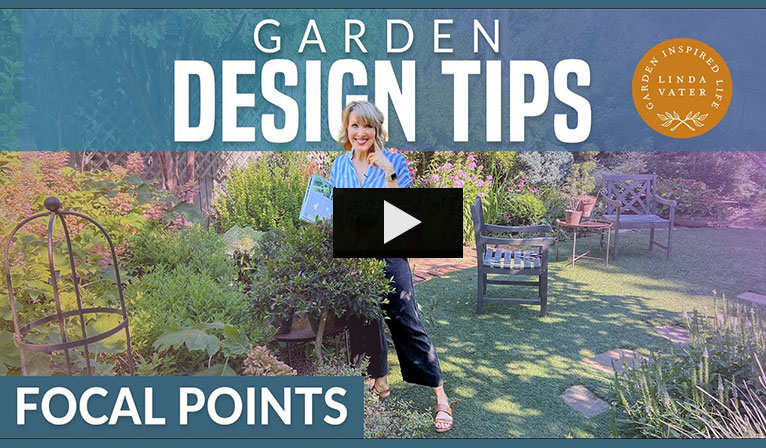
Linda Vater of Garden Inspired Life shares tips on how she chooses and uses focal points in her yard.
HOW TO USE FOCAL POINTS IN THE LANDSCAPE
There are many ways of creating focal points in your yard. Here are some garden focal point ideas for common landscape elements:
Structures:
A stylish garden shed, pergola, gazebo or greenhouse can serve as the main focal point in a garden area. Embellish with brightly colored paint, accessories or lights for a decorative touch.
Seating:
Benches, chairs, and outdoor patio sets can be used as focal points around the yard. Add a pretty seating area on a patio as a featured centerpiece. Place a chair or bench as a focal point along a path, or in a secluded area of the yard for a quiet place to relax.
Gates and arbors:
A decorative gate can be used as a focal point in a side yard, or to divide garden areas. Create a grand entrance or adorn a pathway with an arbor and add ornamental vines such as climbing roses or clematis for seasonal color.
Trellises, panels and screens:
A trellis or panel captures attention to stop the eye. Screens make effective focal points, providing privacy between garden rooms or neighboring yards. Embellish with ornamental vines such as perennial clematis or annual morning glory for seasonal color.
Statuary and sculptures:
A well placed work of art can elevate a garden space from mundane to mesmerizing. Place a statue or sculpture on a pedestal to bring it closer to eye level, increasing its prominence. Choose pieces that complement the style of your home and garden.
Containers:
Place a decorative pot at the end of a path, or use as a centerpiece in a garden area. A large urn can be placed in a lesser used space such as a side yard to draw attention. Group pots together for greater visual impact.
Learn more: Focus on Containers
What the Pros Say: Rebecca Sweet of Harmony in the Garden shares her tips on designing with containers.
Water features:
A decorative water feature captures attention, introducing the sound, movement and reflective qualities of water into the landscape. Many types of water features can serve as focal points, including a fountain, waterfall, birdbath, pond, stream or bowl. Water features attract birds and other wildlife into the garden.
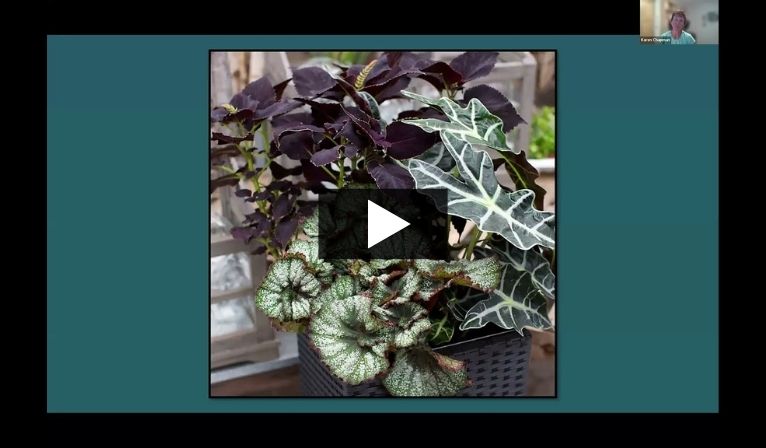
Karen Chapman of Le Jardinet Designs shares tips on using plant foliage to create drama and focus in the landscape.
Plants:
Incorporate a structural plant as a living focal point. Architectural plants such as Japanese maple, yucca and agave can be used as focal points in borders and containers, or to draw the eye through a pathway or garden room. Neatly clipped topiary shrubs make striking focal points in a formal landscape.
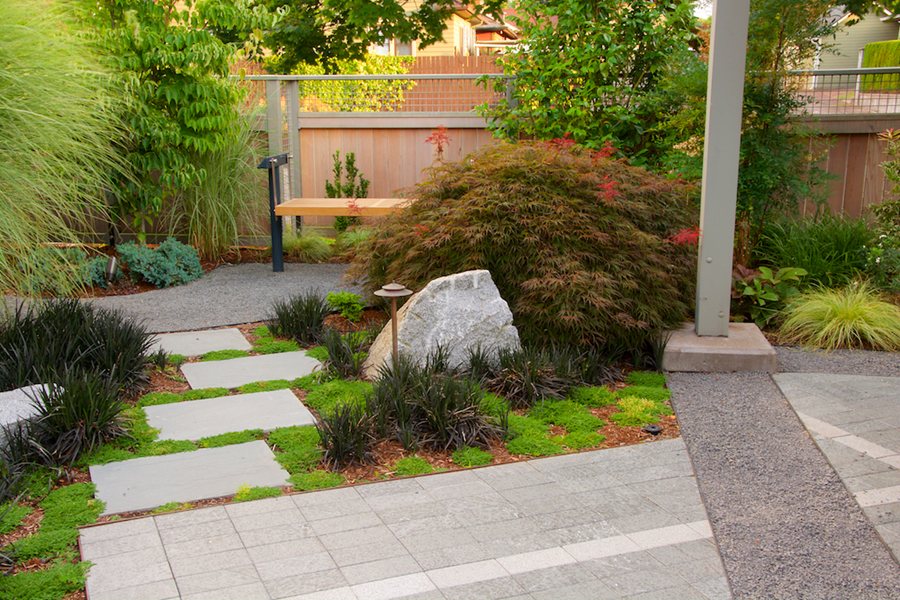
A small boulder is used as a focal point to direct the eye towards an inviting bench in this small backyard garden. Design: David P. Best and Barbara Hilty. Photo by: Janet Loughrey.
Boulders and rocks:
A large boulder or grouping of rocks can serve as a captivating focal point, providing year-round structure.
What the Pros Say: Joanne Kempinger Demski of the Milwaukie Journal Sentinal shows different examples on how to use rocks as focal points.
Fire pits and fireplaces:
To extend time outdoors, add a fire pit or fireplace for cozy warmth in cooler weather. Create a gathering spot in the yard by using a fire element as a central focal point, surrounded by comfortable seating.
FOCAL POINT TIPS
Follow these tips when designing with focal points:
- Accentuate a focal point such as a bench, gate or arbor by placing containers or other decorative elements on either side.
- Use containers as focal points. Karen Chapman of Le Jardinet Designs shares how in this video.
- Reinforce leading lines of pathways or stairways with hardscape edging, ground covers, or formal hedging.
- Create DIY garden focal points by using a recycled or vintage item such as an old bicycle, wheelbarrow or window frame as unique conversation piece.
- Plant formal boxwood hedging around a central focal point such as a large urn or fountain to reinforce its prominence.
- Use a background element such as a green hedge, fence or colorful wall to make a focal point stand out more.
- Employ forms and shapes as focal points. Rebecca Sweet of Harmony in the Garden illustrates how to in this blog post.

Thursday, November 19th @ 6 PM ET / 3 PM PT
A Look Inside “The Essential Guide to Bulbs” with Jenny Rose Carey
FOCAL POINT PHOTO GALLERY

This inviting front entryway garden features a waterfall as a compelling focal point, providing the soothing sound of moving water. Designer: Philip Thornburg, Winterbloom. Photo by: Janet Loughrey.

An intimate seating area is the centerpiece in this private backyard oasis. Eloise Carson garden. Photo by: Janet Loughrey.
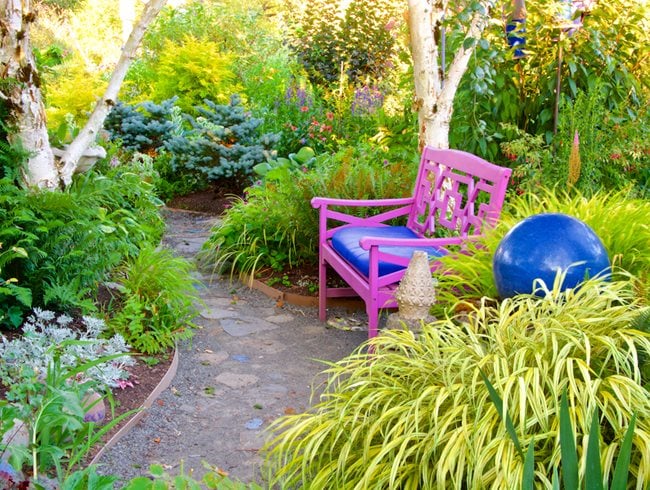
Bold colors liven up a deeply shaded area, with a captivating bench serving as the primary focal point. Statuary and plants are secondary focal points, drawing the eye through the scene. Nancy Cutler garden. Photo by: Janet Loughrey.
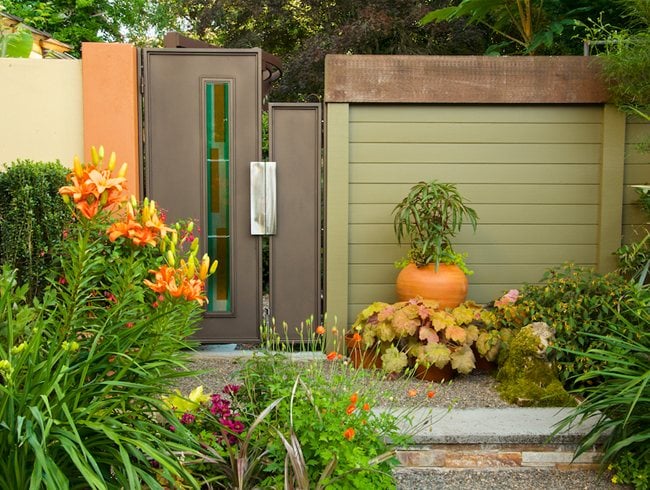
Balance is achieved with the use of color. A custom-made gate and large urn serve as primary focal points along a wall that divides two garden spaces. Pops of bright orange unify the landscape. Linda Ernst garden. Designer: Laura Crockett. Photo by: Janet Loughrey.

Sleek containers placed on either side of an Asian-style arbor establish symmetry and balance. Complementary colors of chartreuse and burnt orange create visual tension, emphasizing the arbor’s prominence as the primary focal point. Designer: Vanessa Gardner Nagel. Photo by: Janet Loughrey.

An appealing garden shed provides functional storage while serving as the main focal point in this small urban backyard. Karen Olberding garden. Photo by: Janet Loughrey.
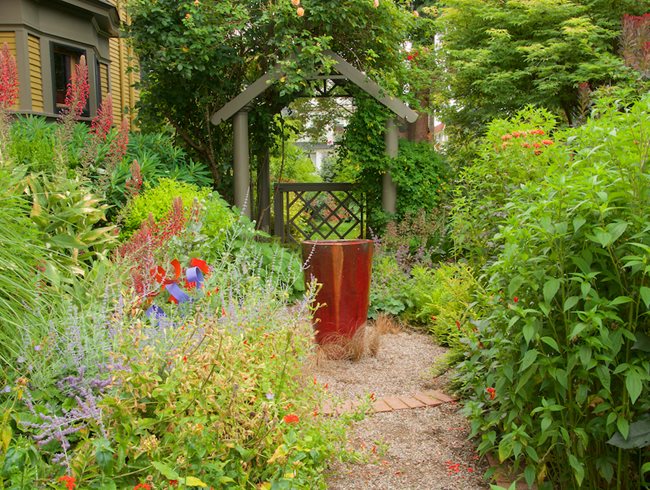
A vividly colored ceramic urn draws attention to a narrow side yard, leading the eye to a gate beyond. Informal plantings frame the scene for balance and symmetry. Susan Fries garden. Photo by: Janet Loughrey.

This inviting front entryway garden is adorned with focal points including a comfortable wooden bench and red ceramic container that echoes the color of the front door. Gail Barnard garden. Photo by: Janet Loughrey.
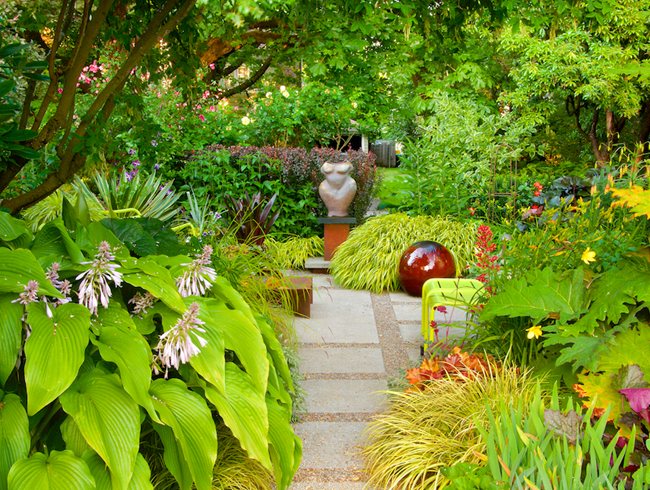
A deeply shaded side yard is brightened with vivid colors of chartreuse, yellow and orange. A series of focal points including bold plantings, seating and sculptures lead the eye to a contemporary statue at the end of the pathway. Linda Ernst garden. Designer: Laura Crockett. Photo by: Janet Loughrey.
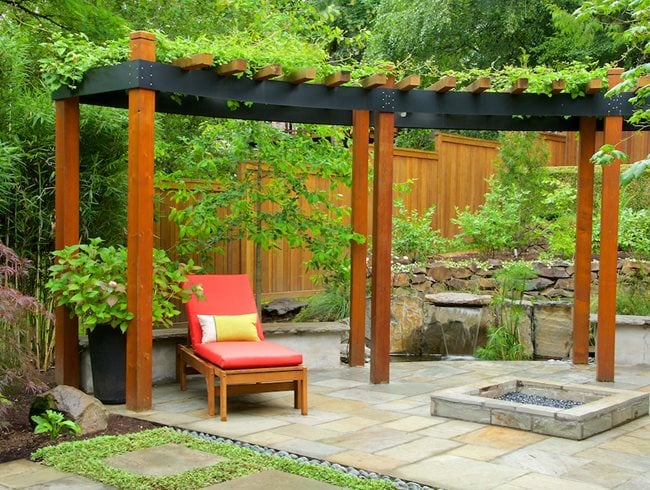
Focal points including a fire pit, waterfall and arbor provide structure and order in this contemporary landscape. A casual lounger is the primary focal point, drawing attention with bright red cushions. Designer: Lori Scott. Photo by: Janet Loughrey.

Comfortable loungers surround a cozy fire pit in this private backyard oasis. Leslie Ebert garden. Photo by: Janet Loughrey.
Related: Secret Garden Ideas
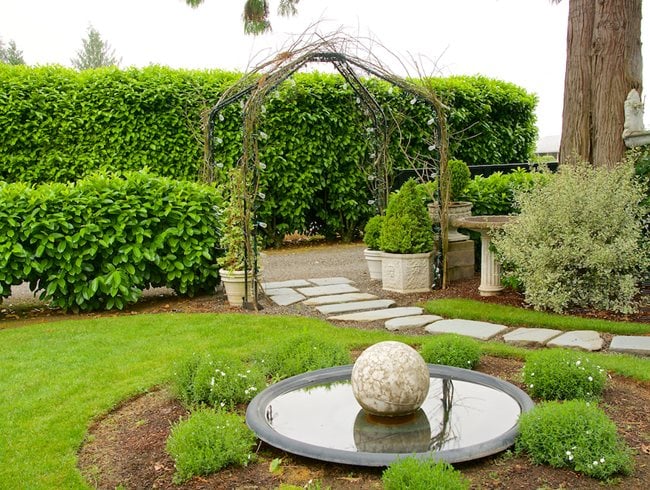
An elegant reflecting bowl is the centerpiece of this formal garden area. The round shape is repeated in the ornamental ball and adjacent plantings, reinforcing the prominence of this serene focal point. Laurel Hedge garden. Designers: Matthew Greydanus and Darrin Simmons. Photo by: Janet Loughrey.
ABOUT THE AUTHOR
Janet Loughrey is a veteran garden writer and photographer with over 25 years of experience, contributing to major publications like Garden Design, Better Homes and Gardens, and Sunset. A former Master Gardener, she brings hands-on expertise from gardening in a wide range of climates, from upstate New York to the Pacific Northwest.
RELATED:
Elements & Principles of Landscape Design
Designing Garden Pathways