Embracing Your Garden’s Evolution
Turn a lost tree or garden setback into an opportunity for something newAfter listening to Dan Benarcik’s recent presentation, one idea really stuck with me: when something goes wrong in the garden, instead of seeing it as a failure, why not reframe it as part of the garden’s evolution? I love this shift in perspective because, let’s face it, not everything we try in the garden works out as planned, and Mother Nature often throws us a curveball when we least expect it.
One thing I’ve learned over the years is that if you garden long enough, loss is inevitable. In fact, one of the top laments I hear from gardeners is when their beloved tree gives up the ghost. Or when several trees must be removed to make way for a new home or garden. Or an unexpected storm brutally rips an established tree out of the ground, leaving a formerly shady garden in full sun.
As painful as these moments are, see them as opportunities for change, growth, or even a chance to try something totally outside the box. After all, what we perceive as a setback might simply be our garden telling us it’s time for something new. I thought I’d share some examples of how gardeners have turned a gardening ‘failure’ on its head, celebrating its evolution. When life gives you lemons, right?
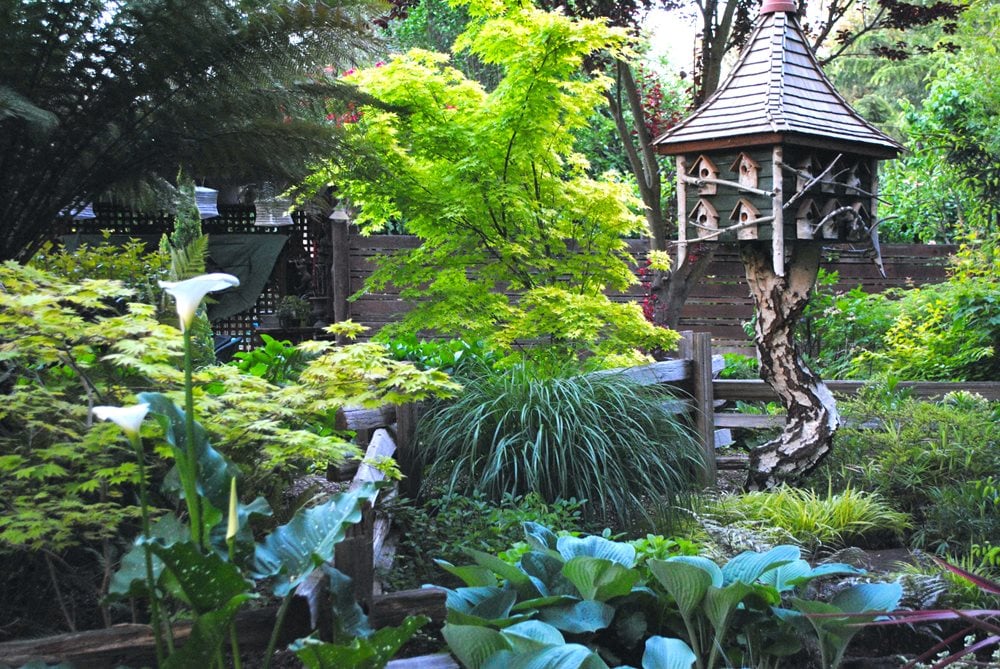
Tanner Garden in Napa Valley, CA. Photo by: Rebecca Sweet
A perfect example of thinking outside the box when dealing with a garden tragedy. Garden designer Freeland Tanner transformed a dead birch tree into a sculptural base for one of his custom birdhouses, using the tree’s shape to give the birdhouse a sense of place while adding height, texture, and a bit of horticultural theater.

Photo by: Rebecca Sweet
Why not give a section of a fallen tree a second life as a pedestal for a planted container? Tucked into the middle of a garden bed, it adds another layer of interest and lifts the planting up where it can really shine. It’s also a lovely way to honor a favorite tree rather than simply hauling it away. While the wood won’t last forever, you can often enjoy this creative solution for several years, giving you plenty of time to make the most of a garden’s next chapter!
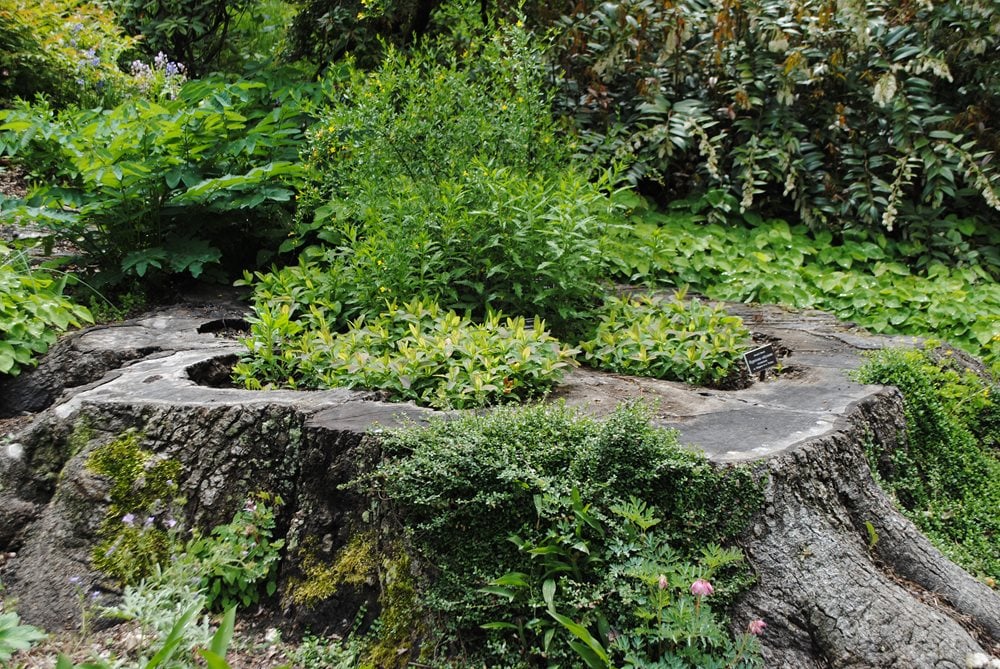
New York Botanical Garden in Bronx, NY. Photo by: Rebecca Sweet
Creating a stumpery is another wonderful way to embrace your garden’s evolution. Rather than removing a dead or partially hollow stump, why not turn it into a home for mosses, ferns, and other woodland plants? I love how this example at the New York Botanical Garden gives new life to something that might otherwise be discarded, creating a whole new planting opportunity in the process.
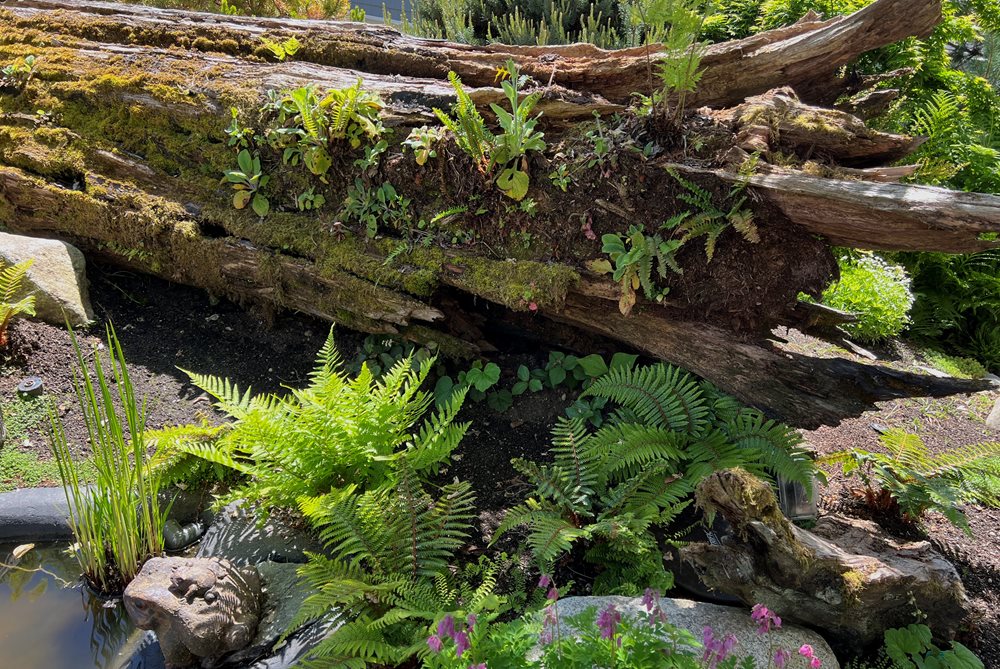
Robin Root’s garden. Photo by: Rebecca Sweet
Covered in moss and ferns, this fallen tree has become a stunning, large-scale living sculpture. Rather than removing it, gardener Robin Root saw an opportunity to create something magical, allowing nature to do much of the work. I love how the tree has become an integral part of the garden, with its own unique character and a wonderful sense of age and place.
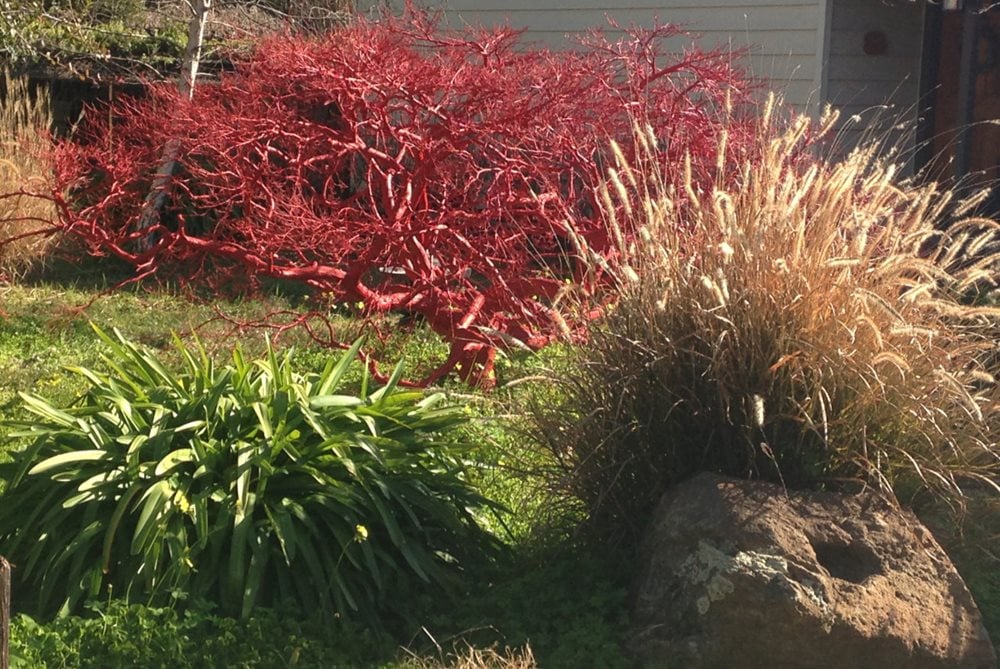
Photo by: Rebecca Sweet
Rather than say goodbye to a beloved Japanese maple, this clever gardener turned it into a year-round garden sculpture with a coat of bright red paint! I discovered this near my previous home and was amazed at how long it lasted (at least 10 years!). Proof that even a dead tree can have a wonderfully long second act in the garden!

Mendocino Botanical Garden in Fort Bragg, CA. Photo by: Rebecca Sweet

Mendocino Botanical Garden in Fort Bragg, CA. Photo by: Rebecca Sweet
The Mendocino Botanical Garden has a stunning way of using what nature provides, including tree branches that have been pruned or have fallen naturally. Rather than letting them go to waste, they’ve turned these branches into decorative gate and fence panels, adding rustic charm while giving new life to materials that might otherwise be discarded.

Thursday, November 19th @ 6 PM ET / 3 PM PT
A Look Inside “The Essential Guide to Bulbs” with Jenny Rose Carey

BOOK REBECCA AS YOUR NEXT GARDEN SPEAKER!
Fun, passionate, and knowledgeable, three words that describe Rebecca Sweet! See what discussion topics are available and watch a short video as Rebecca explains how her talks will inspire, entertain, and educate gardeners at all skill levels.
RELATED:
The Hidden Trick to Placing Pots in Garden Beds
Disguising Eyesores in the Garden