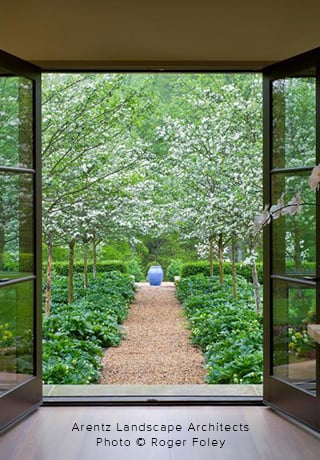
15 COMMON GARDEN DESIGN MISTAKES (& HOW TO FIX THEM)
Create a yard you’ll want to spend time in by avoiding these common landscape design mistakesA beautiful, functional outdoor space doesn’t happen by accident. Creating a well-designed yard involves thoughtful planning and the use of landscape design principles such as scale, balance, proportion, repetition, unity, and flow. Neglecting to follow these guidelines can result in a landscape that is lacking in cohesion, visually confusing, impractical, and higher maintenance.
There are many common landscaping mistakes that homeowners make when designing a garden. By avoiding these pitfalls and following a few basic rules, you can achieve a beautiful outdoor space that you will want to spend time in. Here are some of the most common landscaping mistakes and how to avoid them, along with how to create a beautiful garden in your own yard.
1. Lack of Planning
Whether starting with a blank slate or redoing an existing yard, proper landscape design takes patience and planning. Rushing into a garden project without planning ahead can result in having to fix mistakes later, which can be expensive and time-consuming.
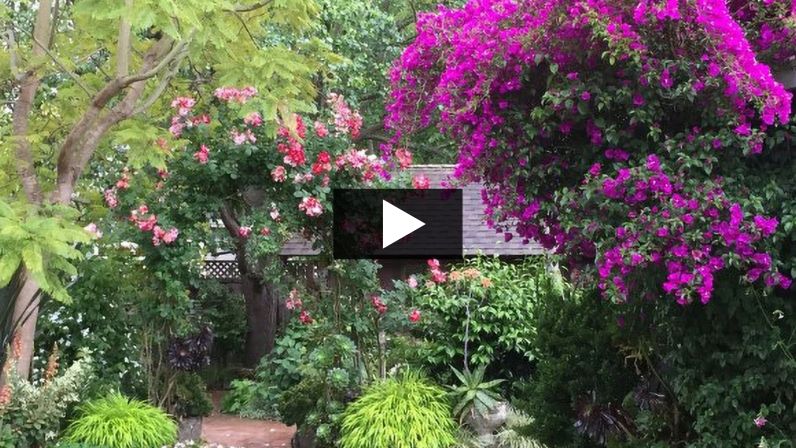
Garden design rules don’t always need to be followed. Rebecca Sweet discusses how breaking the rules can sometimes be beneficial.
For a new property, wait a growing season before doing any major renovations to see how the light falls during the day and different times of the year. This will help determine plant selection and placement. Test the soil for any deficiencies and improve soil as needed. Make a basic plan including a list of the elements you want to include, such as structures, seating areas, ornamental features and plants. Set a budget and make improvements in phases if necessary. For more elaborate projects, consult with a professional garden designer.
2. Inadequate soil preparation
Good soil is essential for overall plant health. Soil that is deficient in nutrients, poorly draining, or drains too quickly can result in weak growth, waterlogged roots, or the inability for plants to absorb water and nutrients, making plants more susceptible to pests and diseases.
Before planting, evaluate your soil. Determine what type of soil you have (sand, clay, silt, or loam) and test for pH levels and nutrient deficiencies. Observe how soil drains. Prepare garden beds by loosening the soil to at least 12 inches deep and amend with compost or other rich organic matter. Correct deficiencies by adding a slow-release fertilizer and/or mineral supplements. Adjust soil pH if needed by adding aluminum sulfate to increase acidity, or dolomite lime to increase alkalinity. Replenish soil each spring by top dressing garden beds with several inches of compost or other rich organic matter.
3. Improper light conditions
Plants have different light needs, with some preferring full sun and others performing best in partial or full shade. For plants that need more light, not enough sun will result in spindly, weak or stunted growth, faded foliage color, and few or no flowers. Plants such as hostas and ferns that prefer shade may incur foliage burn or stress if placed in too much light.
Evaluate your yard to see how the light falls at different times of the day and year. Know the definition of different types of light, such as full sun (6 to 8 hours of direct sunlight), partial shade (4 to 6 hours of direct sun), and full shade (4 hours or less of direct sun). When choosing plants, know what their light requirements are before siting and planting. Group plants together with similar light needs.
4. Poor plant placement
One of the most common garden design mistakes is planting in the wrong spots. This can lead to failure to thrive, overgrown plants, or displeasing combinations.
Before planting a garden bed, make a list of plants you want to include. Draw a rough sketch to visualize where plants will go. Research individual light needs. Trees and shrubs that provide the basic structure should be planted first. Place taller trees towards the back, with medium sized shrubs in the middle, and shorter perennials and ground covers in front for a layered look. Choose varieties that won’t outgrow their space, and allow enough room for their mature size.
5. Poor layout
A yard that is not well planned may result in a poor layout. Elements that are improperly placed can make a garden feel chaotic, less visually appealing, and lacking in purpose or function. Poor pathway placement can result in a lack of cohesion, disrupted flow, and higher maintenance.
Place an outdoor kitchen or dining area close to the house with easy access to your indoor kitchen. An outdoor dog run, children’s play area, or quiet seating area can be placed in a lesser used corner of the yard. Pathways should be wide enough to comfortably accommodate foot traffic and connect different areas of the yard. Use ornamental garden beds to augment your home and outdoor spaces. These can include a foundation planting, hedging along a pathway, a perennial border along a fence, or a colorful garden bed adjacent to a patio or deck.
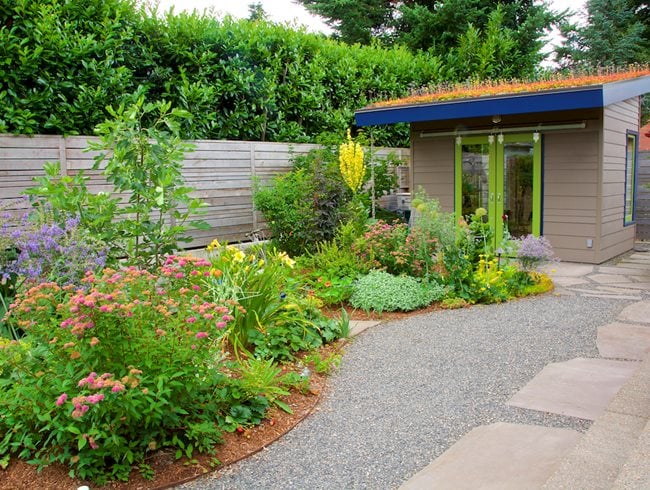
This small backyard has a well-planned layout, with a pleasing balance of hardscape, plantings and a decorative garden shed as the primary focal point. Designer: Marina Wynton, Olivine Land. Photo by: Janet Loughrey.
6. Lack of cohesion
A landscape design lacking cohesion can be visually confusing, chaotic, and disconnected. Outdoor spaces without a unifying theme such as color, style or repetition of the same plants lack a sense of purpose, resulting in less visual appeal and functionality.
A well-designed landscape will seamlessly blend indoor and outdoor spaces, with pathways that facilitate movement and connectivity. Designing a landscape with cohesive elements unifies the design and establishes flow. Choose a garden style such as modern, cottage, or minimalist that complements your home’s architectural style, and carry that same look throughout the landscape. Use a complementary style and colors for indoor and outdoor spaces. Repeat similar hardscape materials, furnishings, and a few key plants throughout the design for repetition and unity.
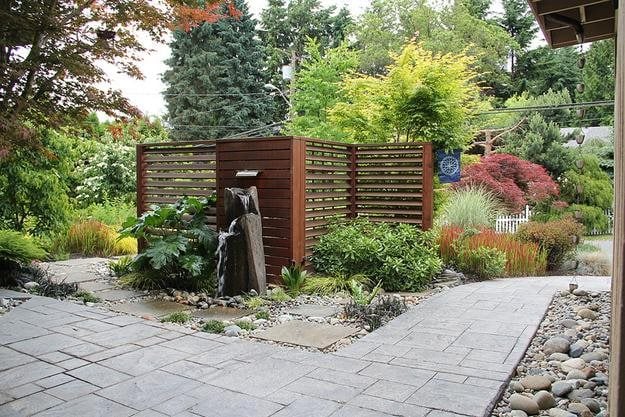
A wooden screen anchors a minimalist garden bed surrounded by stone hardscape, with lush plantings to lend unity and cohesion. See more of this Bothell, Washington garden.

Thursday, November 19th @ 6 PM ET / 3 PM PT
A Look Inside “The Essential Guide to Bulbs” with Jenny Rose Carey
7. Wrong proportions
Too much of any one element will make the landscape appear visually unbalanced. Too much hardscape can result in a sterile look, while an expansive lawn can result in higher maintenance, with little visual interest or biodiversity to support nature. A large hedge can be out of scale in a smaller space, crowding out the main elements.
Achieve a balanced look by using the golden ratio (about 1:1.6), a proportion that is instinctively pleasing to the eye, for visually pleasing compositions. Include a mix of hardscape, planting beds, and lawn. Make sure that elements are in scale with the size of your yard using core landscape design principles. Grassy lawn areas are useful for providing space between garden beds and hardscape.
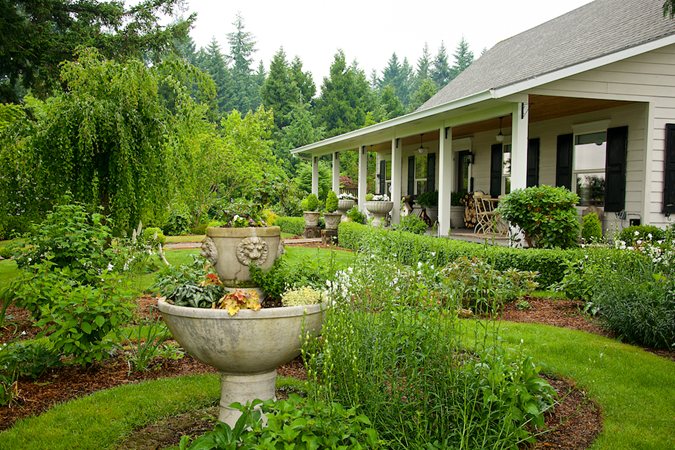
This pleasing vignette is well-proportioned with a mix of structural elements, plantings and lawn for a balanced composition. Laurel Hedge garden. Design by Matthew Greydanus and Darrin Simmons. Photo by: Janet Loughrey.
8. Lack of focal points
One common garden design mistake is failing to use key elements as focal points for visual interest. Without focal points, a landscape lacks purpose and unity, becoming visually chaotic and confusing.
A focal point commands attention, becoming the prominent feature in a garden space. Many decorative elements can be used as focal points, including a shed, bench, water feature, or showy plant specimen. Place a focal point at the end of a pathway, as a central feature in a garden room, or anywhere that more focus is needed. Consider how a focal point looks from all angles, including from inside the home. Use linear elements such as pathways, fencing or hedging to draw the eye to featured focal points.
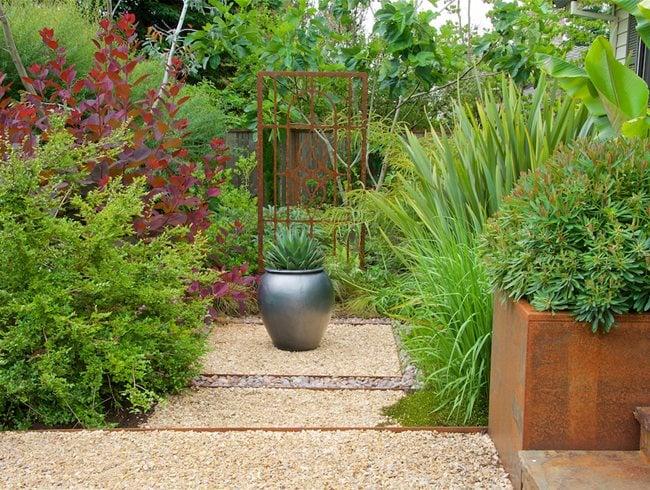
An elegant silver urn planted with agave makes an engaging focal point at the end of a crushed gravel patio. Designer: Adriana Berry. Photo by: Janet Loughrey.
Related: Find more on how to create focal points in the landscape.
9. Disregarding nature
Fighting nature rather than working with it results in higher maintenance, increased expenses, and plants that fail to thrive. Choosing varieties that don’t perform well in your climate, or are not hardy to your growing zone, will result in plant losses. A cactus that is suited to the arid desert Southwest would struggle to survive in the cold, wet Midwest.
Before designing your landscape, know your local growing conditions, annual maximum and minimum temperatures, average first and last frost dates, annual precipitation for rain and snowfall, average humidity, and seasonal weather patterns. Choose plants native and hardy to your region. A landscape that supports beneficial organisms, insects and wildlife results in healthier plants and soil, fewer pests and diseases, and a self-sustaining ecosystem. Avoid the use of pesticides and chemical fertilizers that can harm wildlife and upset soil biodiversity. Include plants that provide food, shelter and nesting habitat for pollinators, songbirds, and other wildlife.
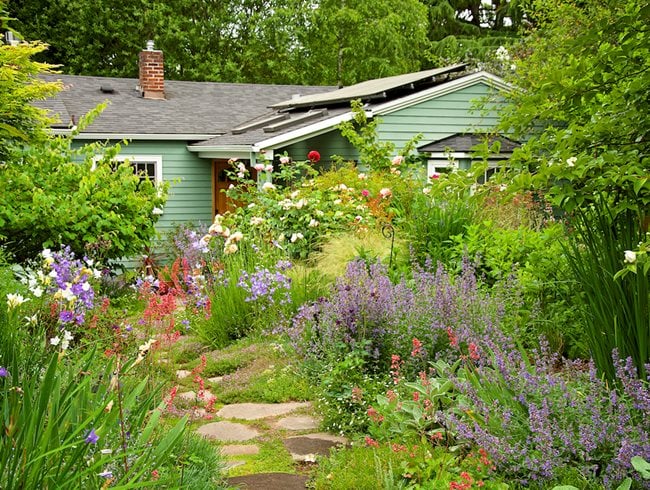
This wild meadow garden was designed to support beneficial pollinators and other wildlife. Jay Withgott and Susan Masta garden. Photo by: Janet Loughrey.
Related: Learn more about meadow gardens.
10. Overcrowding
A yard that feels cramped is not a space you’ll want to spend time in. Too many elements or over-landscaping results in a cluttered space that looks messy and is harder to care for. This can be a more common problem with small urban lots where space is at a premium. Plants that are placed too close together will result in competition for resources such as water, fertilizer and sun, resulting in poor air circulation, weak growth and an increase in pests and diseases.
Keep the design simple, using the basic concept of “less is more.” Limit the types of hardscape materials, colors and plants. Strike a balance with a harmonic blend of hardscape and plants that will enhance rather than detract from the home and yard. Use a few key elements such as a statue or large container rather than a lot of smaller pots. Allow enough space on pathways and around seating areas to comfortably move around so it doesn’t feel cramped.
When planting, allow enough room for the mature size of plants. Don’t forget to leave space around garden beds to allow for maintenance chores, and to avoid breaking or trampling plants.
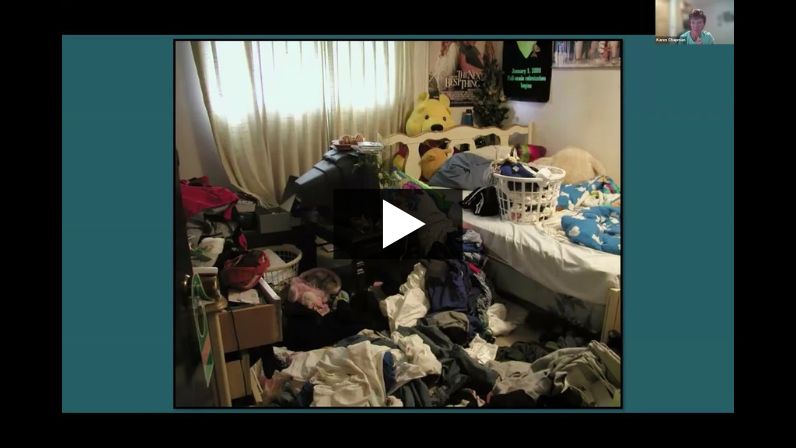
Karen Chapman of Le Jardinet Designs shows what can happen when a garden is too cluttered:
11. Planting beds that are too small
Planting beds that are too narrow look out of proportion to the rest of the landscape, resulting in crowding and plants that fail to thrive. Smaller borders lack focus, intention and depth, and can make a space feel smaller.
Allow at least 4 feet of width for smaller garden beds, and 6 to 8 feet for foundation plantings and mixed borders. Leave enough room around plants to reach their full mature size. Place beds at least 3 to 5 away from home foundations and allow easy access for maintenance. Use a limited plant palette and repeat a few key plant varieties for unity and greater visual impact.
12. Not planting for year-round interest
When choosing plants, many gardeners focus on plants that look good during the warmer months of spring and summer. This can lead to a landscape that is devoid of interest during colder months, resulting to a drab landscape at a time of year when gardeners crave living color in their yards.
When designing a landscape, include broadleaf evergreens such as boxwood and yew, along with conifers such as arborvitae and juniper for year-round color. Include plants with multi-seasonal attributes of colorful berries or stems, attractive seed heads, colorful fall foliage, and structural interest. Add plants with winter interest such as hellebore, witch hazel, heather, and holly. Place plants with winter interest where you can enjoy them from inside during colder months. Include a focal point such as a statue or arbor for year-round appeal.
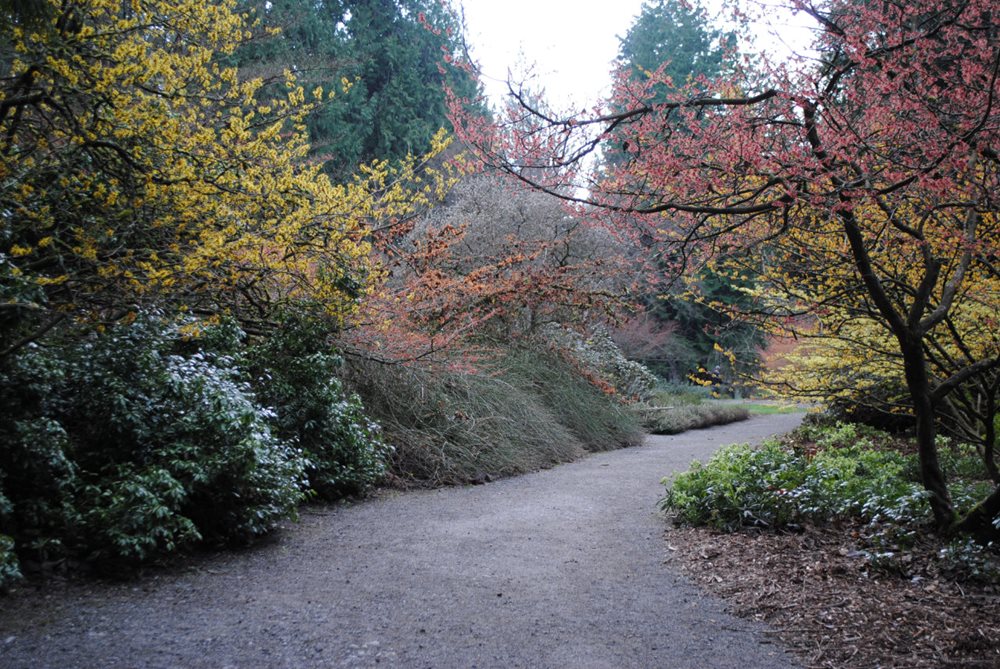
Witch hazel shrubs provide winter color and fragrance. Photo by: Rebecca Sweet.
Related: Read more about creating winter interest in the garden.
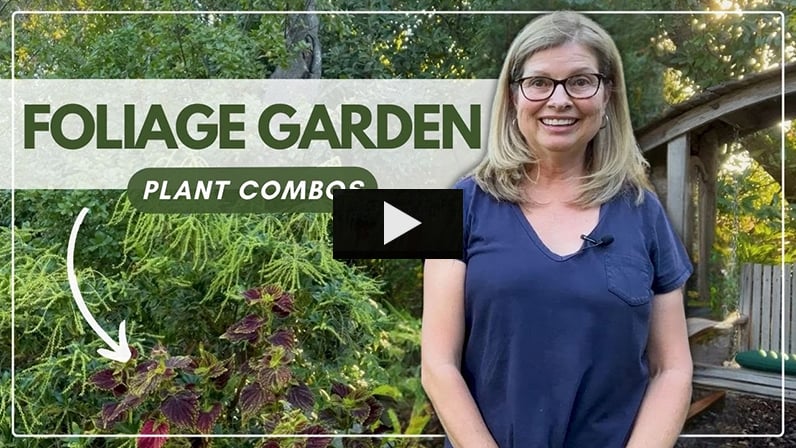
Rebecca Sweet of Harmony in the Garden shares her tips on using foliage for multi-seasonal interest.
13. Too much maintenance
A high maintenance landscape that is time-consuming to care for may result in a neglected appearance and overall frustration, leading to less time spent enjoying your yard.
To create a low-maintenance landscape, follow these tips:
- Keep the design simple rather than fussy, with fewer elements to maintain.
- Use low-maintenance materials for hardscaping, such as gravel, natural stone and permeable pavers.
- Choose easy-care plants including natives that require less pruning, watering and fertilizing.
- Group plants together with similar growing needs.
- Mulch beds to reduce weeds.
- Select furniture made of durable materials that is easy to keep clean.
- Include simple water features that are easy to clean.
14. Failing to include lighting
A landscape without lighting will restrict time spent outdoors and keep your yard in the dark, resulting in possible safety hazards and making your home more vulnerable to intruders.
Use solar or LED lights to illuminate pathways, and make sure other foot traffic areas such as driveways, porches and entrances are well-lit. Include soft lighting in seating areas for evening dining and entertaining. Spotlights and uplights can be used to highlight decorative features such as statement trees, statuary and water features for nighttime ambience.
15. Not considering all five senses
Even if a landscape is visually appealing, it may neglect the other human senses. This can result in a landscape that is not fully appreciated or experienced. A garden without fragrance will attract fewer beneficial pollinators, while the lack of sound allows distracting urban noises, and can make a garden space feel sterile.
A well-designed garden should appeal to all five senses for a more immersive experience. Include plants such as mock orange and lilac for fragrance, edible plants for taste, and textural plants that are inviting to touch. For sound, include water features that provide the soothing sound of trickling water, and ornamental grasses that rustle in a gentle breeze.
ABOUT THE AUTHOR
Janet Loughrey is a veteran garden writer and photographer with over 25 years of experience, contributing to major publications like Garden Design, Better Homes and Gardens, and Sunset. A former Master Gardener, she brings hands-on expertise from gardening in a wide range of climates, from upstate New York to the Pacific Northwest.
More Sources:
University of Florida IFAS Extension: Top Ten Landscaping Mistakes