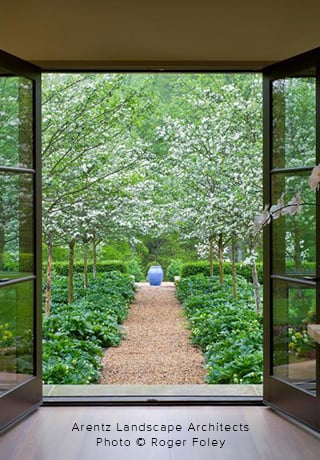
12 Patio Garden Ideas That Transform Any Outdoor Space
Get expert tips and design inspiration for patios of every size, style, and budget.A patio can be many things: a morning coffee nook, an outdoor dining room, a tiny oasis in the city, or a lush extension of your home. The best patio gardens aren’t defined by square footage or elaborate landscaping — they’re shaped by thoughtful design choices that make the space feel welcoming, functional, and uniquely yours.
Whether you’re working with a compact balcony or a sprawling stone terrace, smart use of containers, furniture, lighting, and decorative elements can turn even the simplest patio into a beautiful retreat. These 12 ideas blend creativity with practicality to help you design a patio garden that supports your lifestyle and makes every moment outdoors feel a little more special.
1. Create a Container-Based Layout

Photo by: Suzannah Dolanc-Pugh. See more of her healing garden in Missouri.
Think of containers as architectural elements rather than just plant holders. Mixing materials — ceramic, metal, resin, or terracotta — adds texture and depth, while varying heights creates a sense of movement. Arrange containers to frame a seating area, soften a corner, or guide the eye toward a focal point. For a dynamic, eclectic look without overspending, incorporate containers made of repurposed household items like galvanized buckets, kitchen colanders, or even coffee cans.
Expert tip: “Consider using the same pot at different altitudes: high, medium, and low. Same pot same plants, but that's what makes it dynamic.”
—Dan Benarcik, Pots with Purpose webinar presented on April 18, 2024, sign up for our next webinar
2. Build a Green Wall
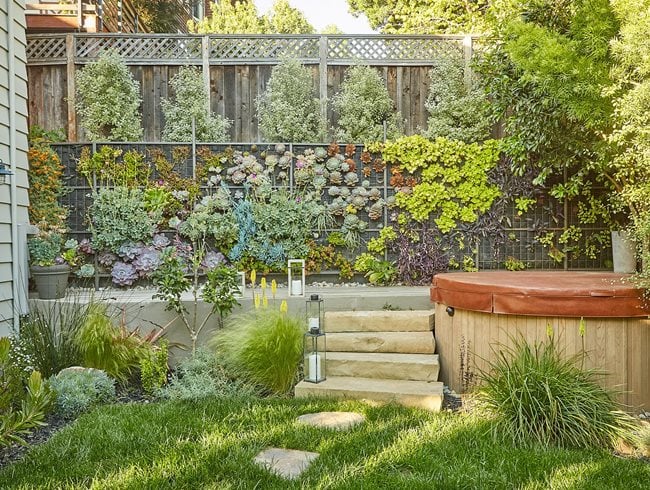
Photo by: Karl Seifert. See more of this small backyard garden in Piedmont, CA.
Vertical gardening is an effective strategy for small patios or blank walls that need personality. Vertical elements draw the eye upward, making tight spaces feel taller and more open. A modular trellis, wall-mounted planters, or slim shelves can transform a flat surface into a lush backdrop. This is also a smart place to tuck shallow-rooted herbs and vegetables like lettuce, spinach, and basil, which add texture and fragrance while staying compact.
Trend alert: Choose foliage with interesting shapes or colors to create a dynamic, art-like effect — almost like a botanical mural that changes with the seasons.
3. Blend Hardscape and Softscape Elements

Photo by: Eric Sternfels. See more of his small garden in Philadelphia.
Mixing materials adds depth and interest to patio design, creating a space that feels layered and visually balanced. Pair sleek concrete planters with warm wood benches, or soften the joints between patio pavers with foot-friendly ground covers like creeping thyme and dwarf mondo grass. The goal is to let hardscape elements provide structure while softscape elements bring movement and warmth, resulting in a space that feels both polished and inviting.
Small-patio tip: A thoughtful mix of materials works beautifully in tight spaces. Pair a simple metal bistro set with a woven rug and clay or fiberstone planters to add variety without overwhelming the footprint.
4. Use Color Strategically

Photo by: Karl Miller. See more of this Pennsylvania farmhouse garden.
Color is a powerful design tool that can unify a patio or make it stand out. Choose a palette — earthy neutrals, coastal blues, or bold jewel tones — and repeat it through cushions, pots, and rugs so the space feels cohesive. Plants can echo the palette, but accessories carry most of the visual impact. Whether you prefer a minimalist look or love vibrant color, let your containers and textiles set the mood.
Budget tip: Color is one of the least expensive ways to refresh a patio. A few new cushions or painted pots can completely change the feel of a space.
5. Create Micro-Zones

Photo by: Eric and Christopher Feml-Nelsen. See more of their Upstate New York garden.
Even compact patios can support multiple functions when you carve out a few well-defined zones. A reading chair tucked into a corner, a small herb station near the kitchen door, or a mini lounge spot with a pouf and side table can make the space feel more engaging and versatile. Create a dedicated dining nook using a bistro table or compact dining set. Use planters, rugs, or lighting to define each zone and guide the flow through the space.
Common mistake to avoid: Oversized furniture on small patios. Pieces that are too large make the space feel cramped and restrict circulation.
6. Use Lighting to Set the Mood

Photo by: Josh Partee Architectural Photographer. Design by: Rose Brady Keane Landscape Architecture. See more of this Portland rooftop patio garden.
Lighting is one of the most transformative elements in patio design. String lights add charm and a soft glow, lanterns and candles create ambiance, and solar stake lights highlight pathways or planters. Choose warm-white bulbs for a cozy atmosphere, and consider subtle uplighting to accent a feature wall or container arrangement. Even a single strand of bistro lights and a couple of lanterns can make a basic seating area look like a destination.
Budget tip: Solar lighting has become both affordable and stylish — a quick upgrade that instantly elevates the space.
7. Add a Statement Planter

Photo by: Linda Hagen. See more of Tracy VanVolkinburg’s vibrant Michigan garden.
A single oversized planter can act as a focal point, grounding the entire patio design. Look for bold shapes, unexpected colors, or sculptural silhouettes that draw the eye. Place your statement planter where it naturally becomes part of the visual flow, such as near an entry point, beside a seating area, or at the end of a pathway. Extra-large planters with architectural lines are increasingly popular in modern patio design and offer both presence and practicality.
Expert tip: “Whiskey barrels are great because they’re deep and dry out slower, which means you won’t have to water as frequently. Add an inexpensive obelisk or build one from bamboo canes to take advantage of vertical space.”
—Heather Blackmore, Here She Grows, There’s More Than One Way to Start a Garden
8. Incorporate Built-In Seating

Photo by: Josh Partee Architectural Photographer. Design by: Rose Brady Keane Landscape Architecture. See more of this Portland rooftop patio garden.
Built-in seating creates a cohesive, space-saving look — especially on smaller patios. Benches integrated into low walls, raised beds, or corner seating nooks reduce the need for bulky furniture and help maintain clean lines. Layer on cushions and throw pillows to soften the structure and introduce color or pattern. Built-ins can also double as hidden storage, keeping outdoor essentials organized and out of sight.
Expert tip: “While there are usually just two of us at home, we also need to be able to comfortably accommodate larger gatherings. We installed a large semi-circular raised bed with a capped wall at sitting height, so even if we run out of chairs there is still seating available.”
—Karen Chapman, Re-thinking the Patio
9. Introduce Water or Fire Features
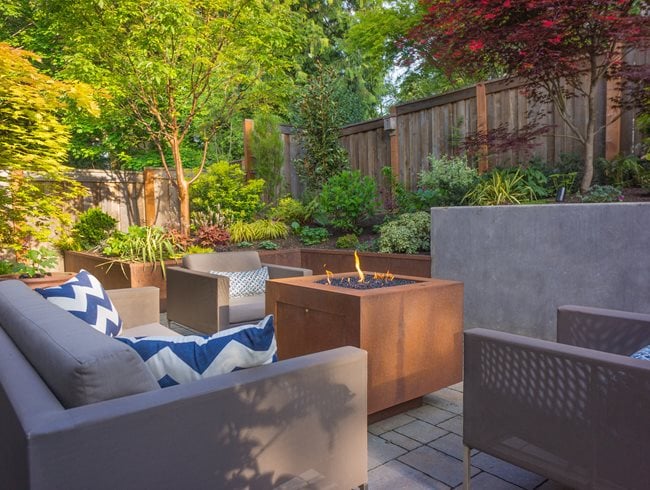
Photo by: Darcy Daniels. See more of this narrow Portland garden.
Water and fire features add instant atmosphere to patios of any size. An outdoor fountain brings soothing sound and movement, while a fire bowl or fire pit adds warmth and a cozy glow for evening gatherings. These elements act as focal points, anchoring a seating area or enhancing a quiet corner, and they come in styles ranging from sleek and modern to rustic. Choose designs scaled to your space so they feel integrated rather than intrusive, and position them where they can be enjoyed from multiple angles.
Trend alert: Sculptural, smokeless tabletop fire bowls and minimalist cascading fountains are becoming favorites for small patios, delivering ambiance without taking up much space.
10. Use Privacy Screens as Stylish Backdrops
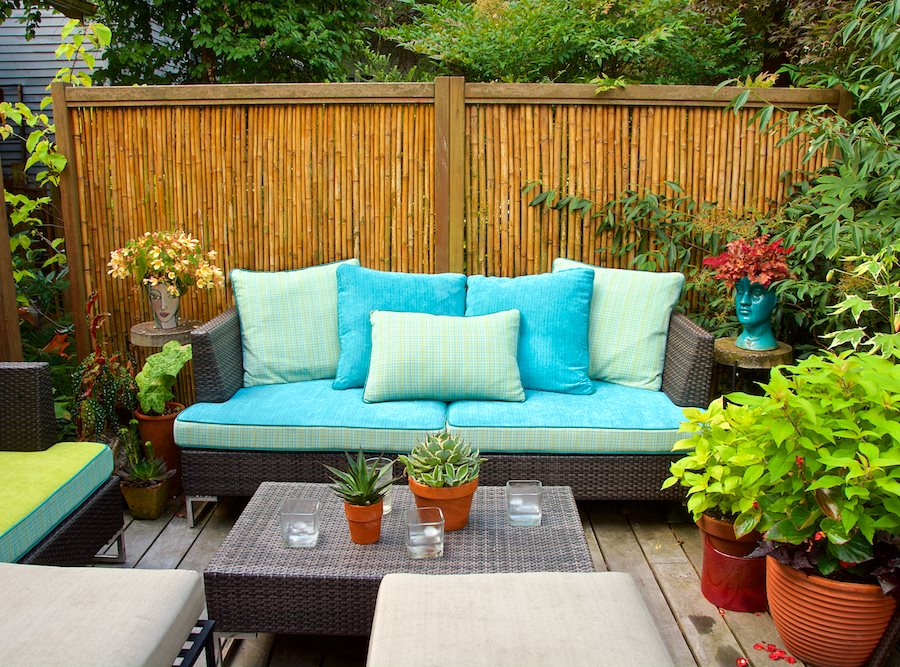
Photo by: Janet Loughrey. Get more garden privacy ideas.
Privacy screens do more than block views — they create vertical focal points that instantly shape a patio’s character. Whether you choose slatted wood for warmth, lattice for a classic garden feel, or metal panels for a modern edge, a screen creates a focal point that anchors the space while offering separation from neighboring yards. Treat it like an outdoor feature wall by placing seating or planters in front of it, or add dimension with climbing plants or mounted lanterns.
Small-patio tip: Position screens to block only unwanted views rather than enclosing the entire patio, which can make a small space feel boxed in.
11. Make Room for a Vegetable Garden
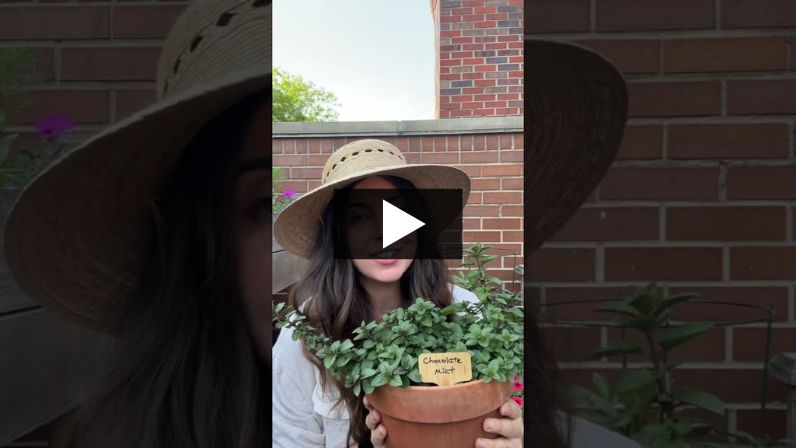
3 Essential Herbs to Plant in Pots
A vegetable garden can fit seamlessly into a patio layout when you treat it as part of the overall design. Plant compact edibles like herbs, salad greens, cherry tomatoes, peppers, and radishes in pots that complement your patio’s style. Use vertical planters or tiered shelves to save floor space and keep herbs within easy reach, or add a slim raised bed that doubles as a border. You can also mix colorful edibles like Swiss chard or kale into containers with ornamental plants to add texture without disrupting the overall look.
Trend alert: Dwarf and patio-sized vegetable varieties — from mini cucumbers and bell peppers to baby eggplant and summer squash — are increasingly popular for small spaces, offering high yields in a small footprint.
12. Embrace the “Garden Room” Trend
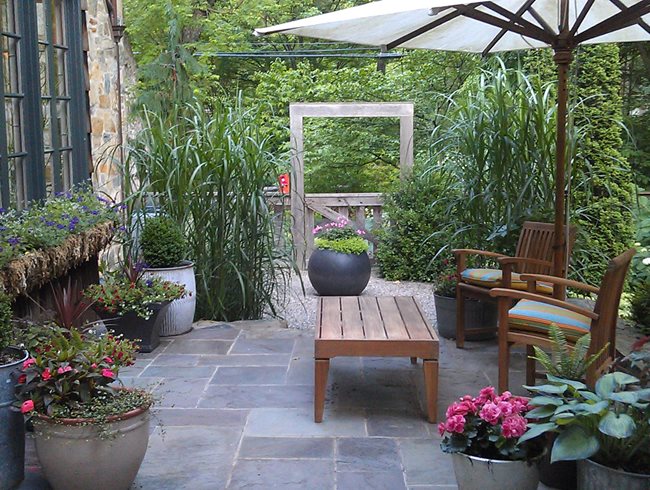
Photo by: Douglas Miller. See more of this Maryland cottage garden.
One of today’s biggest patio design trends is the garden room — an outdoor living space that feels as intentional and inviting as any indoor room. Pergolas, canopies, or shade sails can act as ceilings, while planters, trellises, and half walls frame the edges as garden walls. Underfoot, outdoor rugs help define seating zones and introduce color or pattern that ties the space together. Finishing touches such as mirrors, sculptural lanterns, and garden art brighten the area and add personality to even the smallest patios.
Budget tip: This room-like approach works at many price points. You can build the structure over time and fill it in with simple containers and DIY decor.
Frequently Asked Questions
How do you make a patio look nice on a budget?
Focus on high-impact, low-cost upgrades such as solar lights, painted pots, thrifted furniture, and simple textiles. Plants don’t need to be exotic — even inexpensive greenery looks elevated in a thoughtful layout.
How do I beautify a small patio?
Prioritize vertical elements, built-in seating, and clearly defined micro-zones. Keep furniture scaled to the space, use mirrors to reflect light, and rely on a tight color palette to create cohesion.
What vegetables can I grow on a patio?
Compact, container-friendly options — cherry tomatoes, peppers, lettuce, spinach, radishes, bush beans, and herbs — thrive with good drainage and at least six hours of sunlight daily. Choose varieties that complement the patio’s style so the garden feels integrated.
What are common patio design mistakes?
Oversized furniture, cluttered décor, poor lighting, and a lack of cohesion are the most common missteps. Thoughtful editing and a consistent design palette keep the space inviting.
What are the latest patio design trends?
Mixed materials, oversized planters, minimalist layouts, warm lighting, and multifunctional furniture are leading the way. Patios that feel like stylish extensions of the home continue to grow in popularity.
Thursday, October 8th @ 6 PM ET / 3 PM PT
A Walk Through Chanticleer: Inspiration, Creativity & the Art of Seeing a Garden with Dan Benarcik
ABOUT THE AUTHOR
Anne Balogh is a longtime gardening writer and editor for Garden Design, with over 20 years of experience covering everything from container planting to landscape trends. She draws inspiration from her own Zone 5 garden in Illinois, where she experiments with hardy perennials and flowering annuals.