Garden-Inspired Art
Browse various works of art with botanical themes
8 Ways to Create a Garden That Looks Like Art
Landscape designer Craig Reynolds shares 8 tips for creating gardens that make you feel like you're in a beautiful piece of artwork.
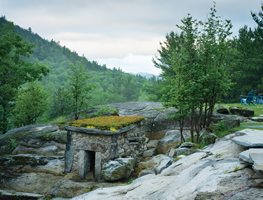
A Stoneworker’s Landscape Design in the Adirondacks
See the work of Lew French—a stoneworker whose creations seem to defy the laws of time and gravity—at a project in the Adirondacks where he acted as landscape and garden designer.
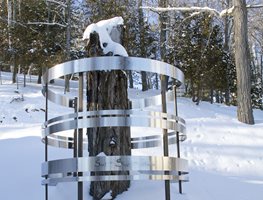
Felled Tree Inspires Beaming Sculpture
Patterson Webster creates a work of art around the trunk of an ancient maple.

7 Tips for Sculpture in the Garden
Brian Dreher, landscape designer with Patch Landscaping shared with us these tips for properly selecting and placing sculpture in the garden.

“A ball of living energy, made from multiple colors of stone swirling about,” is how Devin Devine describes his latest garden art creation, a large 4-foot sphere made of fragments of stone arranged in a circular eddy of waves.
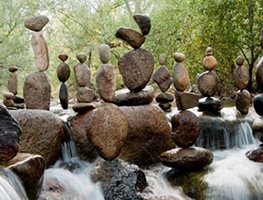
As it turns out, you don't need sleight of hand or even mud to design gravity-defying cairns. You do need a bit of patience, though, and a knack for "knowing the rocks," according to Michael Grab, an land artist who has been balancing rocks since 2008. He builds his sculptures with rocks from the natural landscape, usually alongside water.

The Wonderful World of Charlie Baker
Charlie Baker's custom rustic designs-fashioned from driftwood and salvaged materials-have graced gardens across the country, as well as the windows of Hermès. We investigate the story behind this innovative landscape designer and furniture maker.
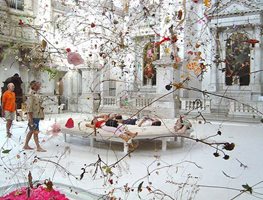
Contemporary Swiss artists Gerda Steiner and Jorg Lenzlinger hung flowers, seeds, and branches in a 17th-century church in Venice as part of the 50th Venice Biennale. They called it Falling Garden, a world in which visitors lie in repose on the mausoleum floor, while "the garden thinks for them."
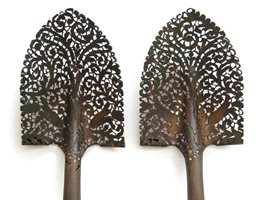
Are artist Cal Lane's garden tools art or implements? Her "Wheelbarrows and Shovels" series is on display through June 16, 2012, at the Art Mûr gallery in Montreal.
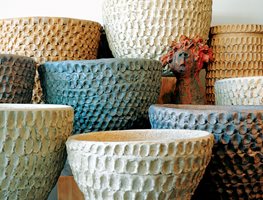
The Work of Sculptor Stan Bitters
Eminent California sculptor Stan Bitters finds a new audience for his timeless ceramics and sculptures, which have graced California's Nut Tree restaurant and the Palm Springs Ace Hotel.

Into the Wood: The Craft of Joshua Vogel
A look at the art and the workshop of Joshua Vogel, a co-founder of BDDW. Shown here at his studio in the Hudson Valley, New York, Vogel produces wooden beautiful furniture, accessories, and sculptures, under the company name of Blackcreek Mercantile & Trading, Co.
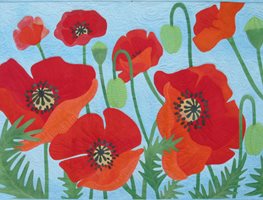
A gorgeous gallery of botanic quilts and appliqué patterns inspired by Victorian floral patterns, American state flowers, and a Zen garden.
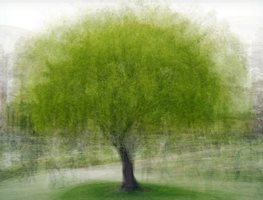
Art & Botany: Pep Ventosa's Trees In the Round
Pep Ventosa's tree portraits are composed of multiple photographs, shot as he circles the subject. In this slide show, Ventosa tells us a bit more about his series "In the Round - Trees," his painting-like images of trees around the world.
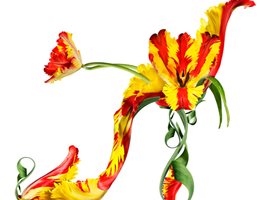
We talk with photographer Michel Tcherevkoff about his collection of imagined floral shoes, Shoe Fleur.
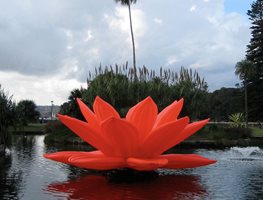
Art + Botany: Choi Jeong Hwa's Flowers
Contemporary artist Choi Jeong Hwa designs big, bright flowers, which he installs in natural and urban landscapes.
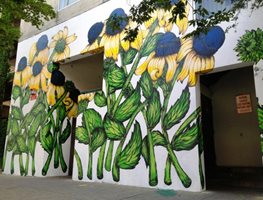
We recently received photos from Kellie Cox-Brady, a botanical muralist in Ithaca, New York. With work so unique, we couldn’t pass up learning more.

Art + Botany: 'Botanica Magnifica' Photography
Jonathan Singer's botanic photographs are collected in the large-format book Botanica Magnifica. Shot on a Hasselblad in low light, the pictures recall the detail of early plant engravings, and the dramatic style of Old Master paintings.

Art & Botany: Flowers of Steel
London-based artist Zadok Ben-David makes flowers and trees out of cut metal, including his best-known pieces, which feature intricate flowers, modeled after Victorian illustrations.
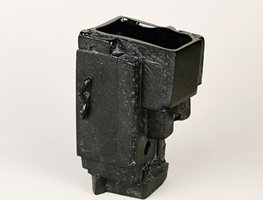
Dramatic black and white vases designed by well-known artists serve as sculptures on their own, or serve as beautiful vessels for winter arrangements.
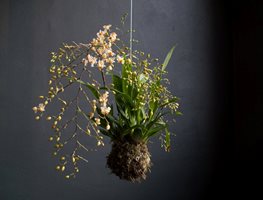
Plants, unplugged, might be the best way to describe the stunning suspended plant-artworks developed by one Fedor van der Valk, who makes these beautiful hanging plants in Amsterdam, under the name String Gardens. Uprooting flowers and trees from their regular terrestrial spots not only showcases the roots, so rarely seen by humans, but elevates the individuals plants into unexpected sculptures.

Landscapes to a Tee: The Art of Golf Course Landscapes
Joshua C. F. Smith is in the rarefied field of golf landscape artists. As part of National Golf Month in August, we caught up with him for a behind-the-scenes look at how he captures the natural beauty of a golf course landscape in his paintings.

Art+Botany: Shakespeare's Plants
The plants of tragedy, comedy, and history: a gallery of botanic references from the plays of William Shakespeare.

An interior designer, painter and artist who uses wall space as her canvas, Sterk specializes in wallpaper with bold patterns and scenic murals.
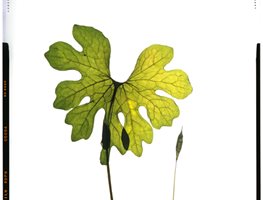
Art & Botany: Honour Hiers Photography
Photographer Honour Hiers collects plants near her home in Western North Carolina, then presses the specimens and photographs them on a light table with 4x5 chrome film.

Art & Botany: The Drama of Fruit & Flora
In celebration of the holiday centerpiece, we've assembled a gallery of still lifes by old master and modern artists.
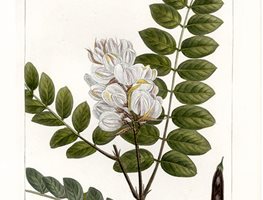
Art + Botany: The North American Sylva
Written by French botanists who explored North American forests in the late 1700s, The North American Sylva is a monumental work with masterful illustrations and extensive botanic profiles.

Art & Botany: Beth Dow's In the Garden
Beth Dow's photographs of formal English and Italian gardens capture quiet moments that belie a garden's ever-humming life.